AWS Landing Zone & Guardrails
Infrastructure that survives the on-call rotation.
A Terraform-based AWS foundation covering VPC architecture, GitHub OIDC, security guardrails, and CI-tested infrastructure modules.
- Role
- Design + build + operate
- Client
- Sage Ideas (Internal)
- Category
- Infrastructure
- Status
- Operational

Terraform Modules
4
Critical Vulns
0
Products Using Modules
3
Long-Lived Keys
Eliminated
Buyer read
What changed here?
Use this as proof for infrastructure-heavy businesses that need order before growth multiplies the mess.
Before
Cloud environments become fragile when accounts, permissions, networks, and deployment rules grow without a foundation.
System
A landing-zone pattern that makes environments, identity, network boundaries, and release constraints visible.
Result
The operating foundation reduces surprise and gives teams a safer path to scale.
4
Terraform Modules
0
Critical Vulns
3
Products Using Modules
Living architecture
Surface ⇄ System
AWS Landing Zone & Guardrails is presented as both the product people touch and the operating system underneath it: UI, data model, integration path, evidence, and outcome.
Discuss a Build engagement- 01Visible productScreenshots and product frames show the user-facing surface without pretending concept art is production proof.
- 02Operating architectureThe case includes a system map so the architecture is visible, not buried in prose.
- 03Evidence registerMetrics, build logs, diagrams, CI artifacts, and links separate actual work from agency theater.
- 04Commercial pathThe page routes qualified buyers toward a matching build, automation, or lab entry.
// scroll to x-ray the build
surface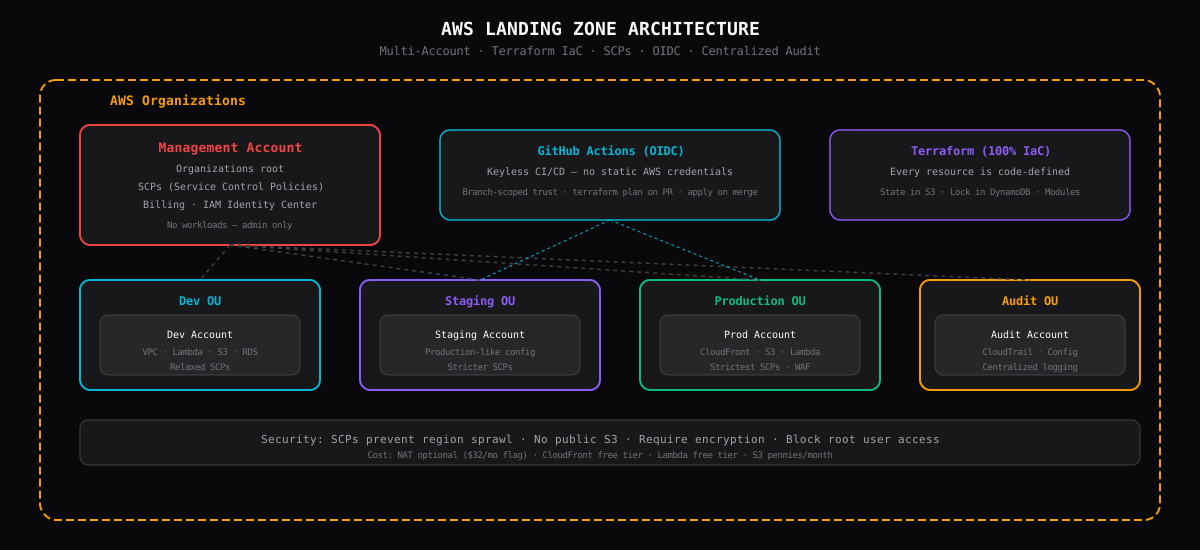 system
case flow
Surface ⇄ System
AWS Landing Zone & Guardrails operating map
The diagram is intentionally simplified: it shows the buying logic and operating path, not a decorative fantasy architecture.
client
Sage Ideas (Internal)
category
Infrastructure
evidence
3 assets
Proof board
Receipts before claims.
This page separates shipped surface, system map, real metrics, and available artifacts so the work can be inspected instead of just admired.
proof assets
8
Screens, gallery, artifacts
screens
2
Real product surfaces
artifacts
3
Available during discovery
Primary evidence
Infrastructure that doesn't need babysitting.
Terraform Modules
4
Terraform Modules
4
Critical Vulns
0
Products Using Modules
3
Long-Lived Keys
Eliminated
Surface
Product screenshots and interface frames show the user-facing layer. If real assets are unavailable, the page says so instead of dressing mockups as production proof.
System
Architecture diagrams, build logs, and artifacts make the hidden operating layer visible to technical buyers.
What was broken.
The pattern is familiar: a startup spins up AWS resources manually, the "just this once" approach becomes the permanent approach, and two years later nobody knows what's in the account, the IAM policies are a maze, and the first security audit is a bad day.
Good infrastructure should be boring. Reproducible, documented, version-controlled, and provably secure. The AWS Landing Zone project establishes that baseline from day one.
The challenge: building a Terraform-based AWS foundation that covers the real requirements — proper VPC architecture, secure S3+CloudFront patterns, Lambda API scaffolding, GitHub Actions OIDC (no long-lived AWS keys), account-level guardrails, and CI gates that prevent misconfiguration from reaching production — all packaged as reusable modules.
How it was built.
VPC Module: multi-AZ VPC with public/private subnet split, NAT gateway configuration, VPC flow logs, security group baseline. S3 + CloudFront Module: static asset distribution with proper bucket policies, CloudFront OAI, cache invalidation patterns, HTTPS enforcement. Lambda API Module: function configuration, IAM execution role, API Gateway V2, environment variable management, log group with retention.
GitHub OIDC Module: federated identity between GitHub Actions and AWS — eliminates long-lived access keys from CI pipelines entirely. Landing Zone Module: AWS Control Tower-compatible baseline — root account security, SCP guardrails, CloudTrail, Config Rules, Security Hub findings.
Every module CI-tested with: terraform fmt check, terraform validate, tfsec security scanning, checkov compliance scanning, automated plan on PR, apply on merge to main (with approval gate).
The system map.
How the pieces talk to each other.
Measured, not asserted.
The real figures from the engagement, printed verbatim. Bars are scaled against the largest comparable magnitude in the set — a secondary cue, never the source of truth.
Selected screens.
Real product surfaces from the engagement — not stock illustrations.
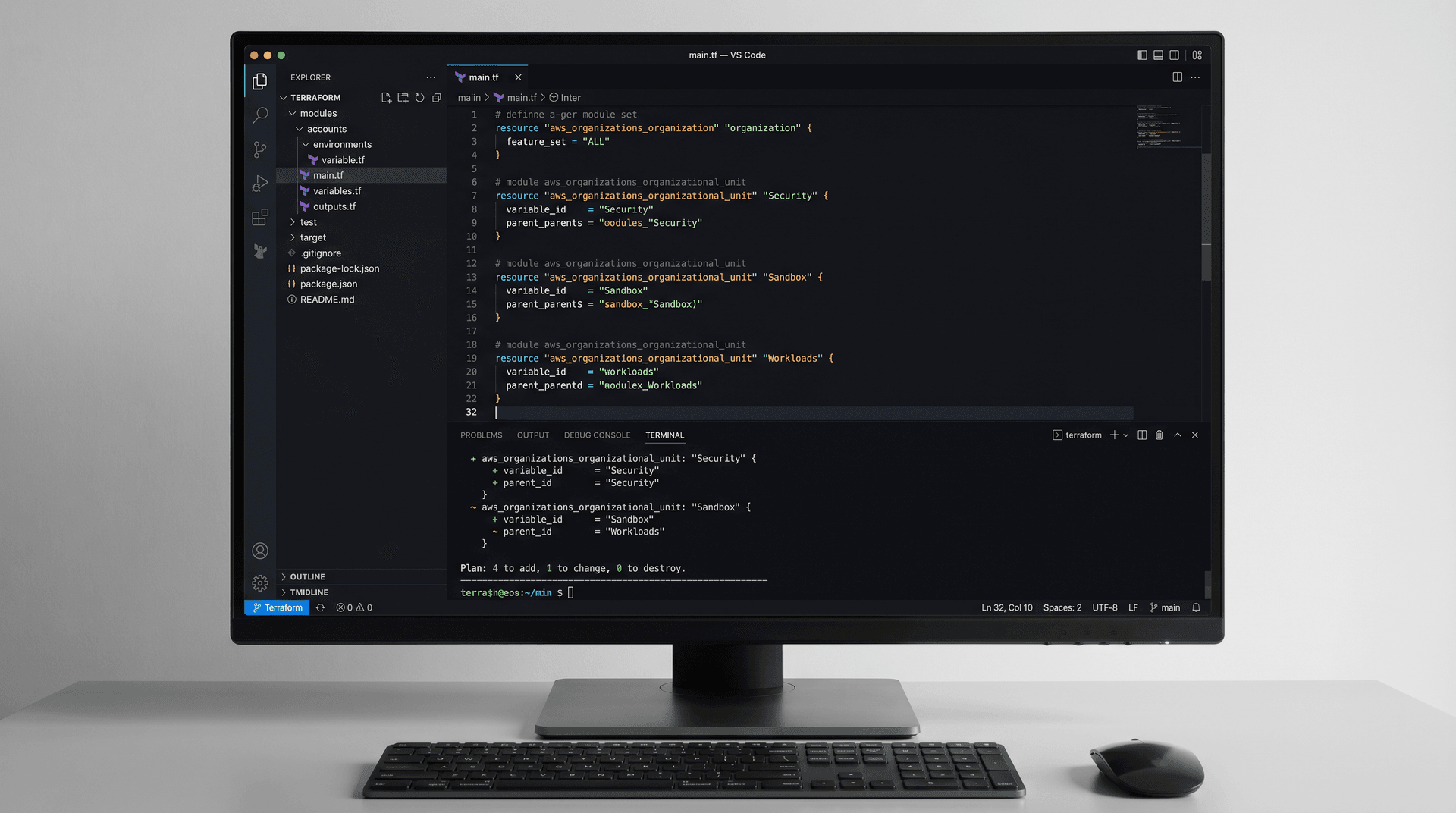
Control Tower view — 13 accounts, 4 OUs, all guardrails green and SCPs in effect.
What it actually looks like.
Architecture diagrams, CI runs, and dashboards from the engagement.
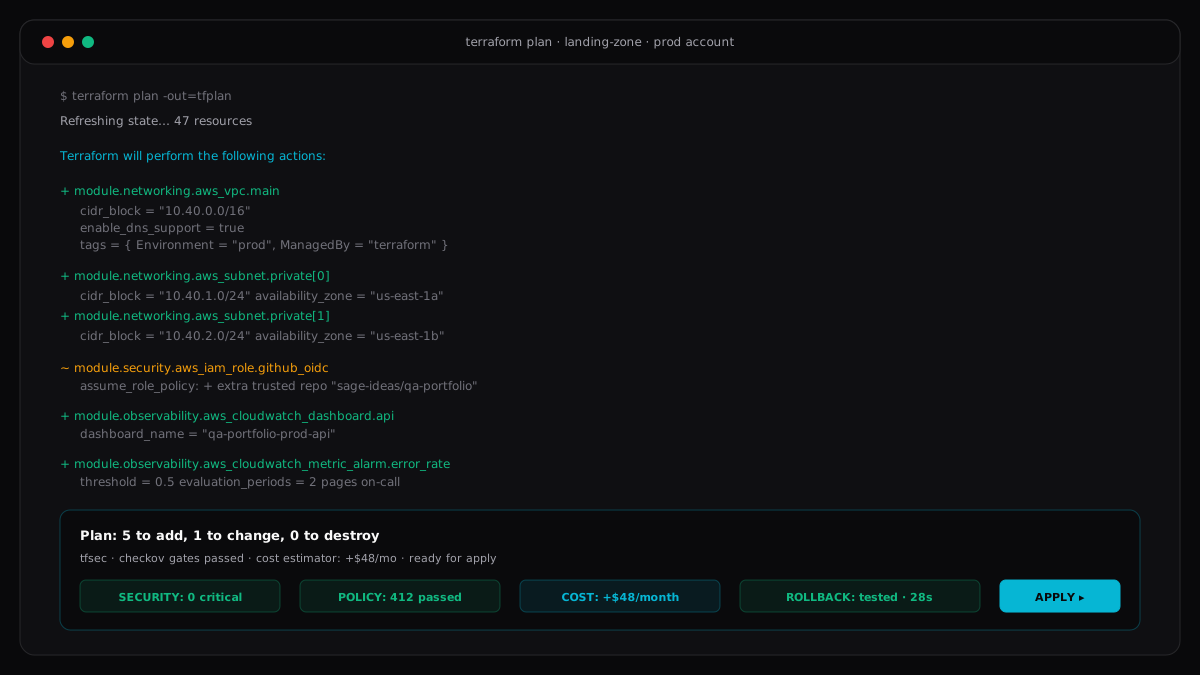
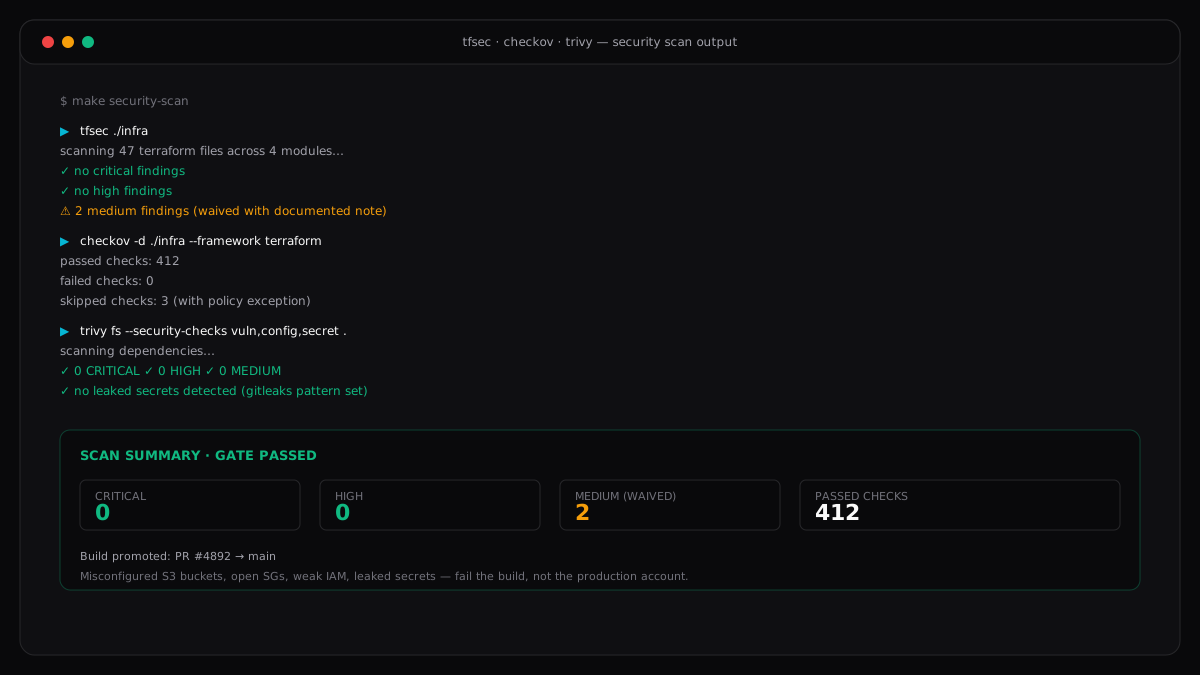
What shipped.
The verbatim ship record, given timeline structure.
- log · entry 01
4 public Terraform modules (terraform-aws-vpc, terraform-aws-s3-cloudfront, terraform-aws-lambda-api, terraform-aws-github-oidc). AWS Landing Zone module with full guardrail set. CI/CD pipeline: GitHub Actions workflows for all modules.
- log · entry 02
Security scanning: tfsec + checkov integrated into every PR. Documentation: README for each module with example configurations and variable references.
What it proved.
All modules CI-tested and security-scanned with zero known critical vulnerabilities. GitHub OIDC pattern eliminates long-lived AWS credentials from every pipeline that adopts it.
Landing Zone module provides a documented, reproducible baseline for new AWS accounts. Modules in use across 3 Sage Ideas products (Nexural, Jobpoise, Trayd).
Infrastructure-as-Code disciplines — version control, CI testing, security scanning, modular design — should apply to AWS configuration exactly as they apply to application code. The modules here represent the baseline applied to every new project, not an optional enhancement.
Available on request.
- GitHub: All 4 Terraform modules (public)
- Module documentation and example configurations
- CI pipeline templates
Talk to people on this work.
No fabricated quotes. Reference contacts are shared during discovery, with both parties' consent.
Engineering lead
Worked alongside on production trading systems for 5+ years. Available for technical reference calls — code quality, on-call discipline, incident behavior.
Founder
Engaged Sage Ideas for a Ship + Operate combination. Willing to talk about scope discipline, timeline accuracy, and what handoff actually looked like.